
Grand Saline Busted Mugshots
Grand Saline sits in Van Zandt County and counts 3,107 residents. That figure comes from the 2020 Census. It makes the city the county's third-largest incorporated place. Enforcement splits between the Grand Saline Police Department and sheriff activity in the surrounding area. The Texas DPS approved-agency listing gives the department the identifier TX2340300 and lists 903-962-3145 as its phone. Knowing that identifies the city agency. Still, a police report and a county jail record are separate things.
An arrest that ends in detention goes to the Van Zandt County Detention Center. The sheriff then holds the custody record. The police report covers only the event itself. The jail entry, when public, reflects county intake instead. Following those record routes beats an informal hunt for who got busted in Grand Saline. One caution applies here. The city publishes no arrest log, blotter, or booking-photo page. That absence just means no verified public channel exists. It does not mean the records are missing.
Important. A booking entry records a custodial event, and later court action can reduce, dismiss, or resolve the charge in some other way.
Where Grand Saline Busted Mugshots Appear
Work through the official sources in order. The city route gets you the event report. The sheriff route gets you county custody. Check more than one channel when you can, since county and court records answer different questions. One more thing is worth knowing. The detention search does not promise a photograph with every result. A missing image or empty result proves nothing either way.
| Channel | Photo status | Official? | Best use |
|---|---|---|---|
| Grand Saline city or police contact | No verified public photo page | Yes | Request an incident or arrest report and confirm records routing. |
| Van Zandt County Sheriff's Office | Not confirmed on the public landing page | Yes | Start with the agency page and route a written public-information request. |
| County detention portal | Verify in the individual result | Yes | Check current or released county custody, name, charge, and days searches. |
| County Clerk records search | No booking-photo promise | Yes | Research county-court filings and later case information. |
| District Clerk | No booking-photo promise | Yes | Find district-court routing and expunction materials. |
| County-local aggregators and news outlets | May show photos or labels | No | Use only as a lead, then verify the official custody and court record. |
The last row stays secondary for good reason. A third-party page can go stale, leave gaps, or misidentify someone. It may even keep a booking entry up long after a court record has changed. No official source offers a complete online collection of Grand Saline arrest photos.
Grand Saline Booking Lookup
When a Grand Saline arrest lands someone in the detention center, the county portal is the practical place to look. Search by name, not by photo. The portal splits current inmates from released ones. Check both lists for the same person. Its days field sets a search window. It is not a certified daily arrest log. The Van Zandt County booking-record lookup collects the wider county procedures, including the roster and the written-record route.
- Confirm the person's full name and the approximate arrest or booking date before searching.
- Open the official detention portal and begin in Current mode for someone believed to be in county custody.
- Search by name. If the result is unclear, use the charge-description field or a days value, and note the access date.
- If Current has no match, search Released. A released entry can remain available after it no longer appears as current.
- For a city event without a county match, ask Grand Saline for the incident or arrest report and ask the sheriff for the specific booking record if county detention is known.
For a same-day check, a one-day search value is the closest official option. The portal defaults to five days for a broader sweep. Timing gets tricky, though. Intake can lag behind the arrest, and releases happen fast. City paperwork often surfaces before county booking does. The county publishes no fixed update schedule, no online-retention period, and no confirmed photo-display rule. So treat an old or missing result as a prompt for a specific records request. Do not treat it as a conclusion.
Grand Saline Police Records
Direct your questions to the right office. Ask the city or police contact for an incident or arrest report tied to the Grand Saline event. Ask the sheriff for the jail booking sheet, booking and release dates, charge descriptions as booked, bond information if releasable, and a booking photo if one is kept and can be released. A written Texas Public Information Act request under Chapter 552 should name the person, give an approximate date, identify the arresting agency, and include any known booking number. Ask the custodian to flag withheld material and the legal basis for it. Get a cost estimate before any charged work begins. The City of Grand Saline's official site is where to confirm current city contact and records-routing details.
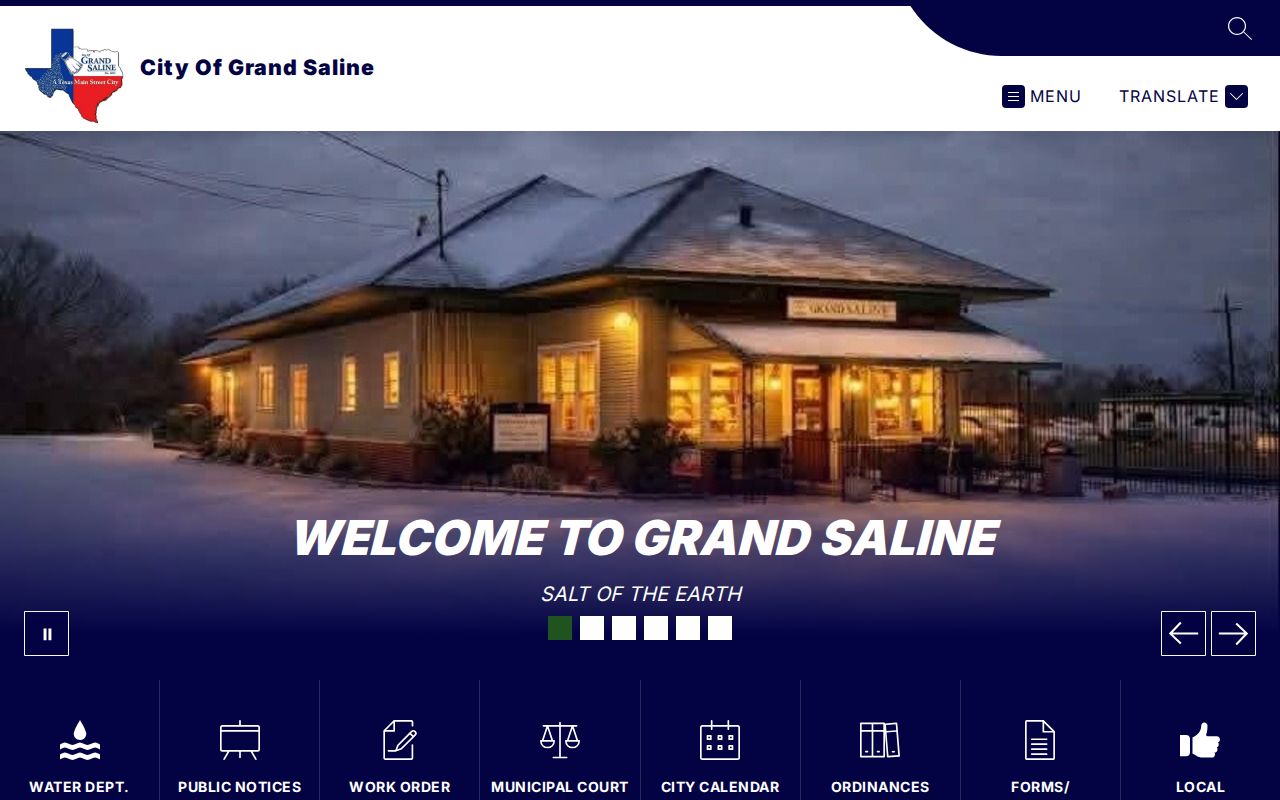
The city-government page lists no police-records desk. There is no public arrest log either. No booking-photo policy appears anywhere on it. So confirm the right recipient with the city before sending an incident-report request. For anything tied to a county booking record, use the sheriff route instead.
The regional city directory supplies the City Hall address and number listed here. Treat it as City Hall information, not a confirmed police-station address. Before mailing anything, verify the recipient, delivery method, fees, and the city's current records process with Grand Saline directly. For the county side, the sheriff's main line is the documented routing number, and no separate records line is published. Expect the city and county to apply different charges and response practices.
Grand Saline Busted Custody States
Two custody labels appear in the portal: Current and Released. Current means the person shows in the county's live custody view. Released means the entry has left that view. It still surfaces through the portal's released mode, though. Someone missing from both modes may have been transferred. Booking in another county is another possibility. A different spelling can also hide an entry. Save the details you need early. The spelling, date, agency, and booking number all matter later, because the portal does not promise how long released entries stay viewable.
The inmate and charge indexes help narrow a recent search. So does the days control. But they are not an archive. For what a case became, turn to the clerks. County-court matters run through the County Clerk route. District-court matters run through the District Clerk. A booking charge, a filed charge, and a final outcome can each look different.
State prison custody is a separate channel. The Texas Department of Criminal Justice offender search covers it if a person reaches that point. That tool does not replace the Grand Saline police report, the Van Zandt County Detention Center booking record, or the court path. TDCJ also does not release public inmate photographs.
Busted Grand Saline News Routes
News on Grand Saline arrests travels mostly through county and regional outlets. Van Zandt News is the main county paper, and it runs crime stories when something happens. The Canton Herald's news section covers the county too. Neither works like a live booking feed, so expect event-driven pieces rather than a steady roster of Grand Saline mugshots. A story gives context. For the facts, the sheriff, police, and court records still carry the weight.
Aggregator sites are another route. The shared county pages at Busted Newspaper, RecentlyBooked, Mugshots.com, Arrests.org, and Mugshots.zone may show a Grand Saline name, date, label, or photo. None of them belongs to the county, and coverage habits vary from site to site. For the wider picture across Van Zandt County, see Crime News & Mugshots.
When a headline raises a question, go to the source agency first. Check the detention portal for custody status, request the underlying report if needed, and follow up with the right clerk. A caption or a republished image is a lead, not an answer.
Grand Saline Busted Warrant News
Grand Saline has one standout example of wanted-news going local. Texas DPS reported that Ten Most Wanted fugitive Trevor Rhea McEuen was captured near Grand Saline after a SWAT standoff. The DPS capture report shows a statewide wanted notice turning into local news. It does not, however, create a current Grand Saline warrant list.
No self-service Van Zandt County warrant portal exists. There is no sheriff most-wanted page for public checking either. For a current-status question, contact the sheriff's office and the likely issuing court directly. Anyone facing a possible warrant should talk to an attorney or the court about lawful resolution. Never approach a wanted person. Send tips through the responsible law-enforcement channel.
Grand Saline Court Dispositions
A booking record starts the public trail. It rarely ends there. As a case moves forward, the court file may show a cause number, filed charge, hearings, a plea or trial event, dismissal, acquittal, judgment, or sentence. Availability depends on the court. A blank online search means nothing by itself. Confirm the court, name, cause number, and dates. Then call the clerk if the public search falls short.
Texas law also limits what stays public. An expunction order can require agencies and courts to return, destroy, or delete identifying references. Nondisclosure works differently. It restricts public release while keeping some law-enforcement access intact. Neither remedy comes from a casual request. The district-court materials offer a local procedural starting point, and a qualified legal resource can sort out individual eligibility.
Public Record Search
Sponsored Results